Condition
Nail Bed Injuries
Injuries to the tissue under the fingernail, including blood under the nail and cuts that affect how the new nail will grow.
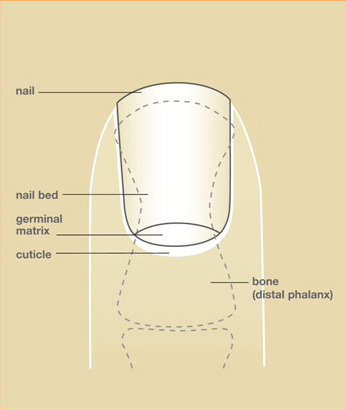
Illustration © American Society for Surgery of the Hand
What is a nail bed injury?
The nail bed is the soft tissue directly under the fingernail. It is responsible for making the new nail as it grows. When a finger is crushed, cut, or slammed in a door, the nail bed underneath is often injured even if the skin and nail look mostly intact. Blood can collect under the nail, or the nail bed itself can be cut. Because the new nail grows out of this tissue, how the nail bed heals affects how the next nail will look.
Common symptoms
- Dark blue, purple, or black discoloration under the nail
- Severe throbbing pain at the fingertip
- A torn, loose, or missing nail
- Bleeding from under or around the nail
- A cut through the nail extending into the nail bed underneath
Why does it happen?
Nail bed injuries usually follow a crush or sharp injury to the fingertip:
- A finger caught in a door, drawer, or car door
- A hammer or heavy object striking the finger
- A cut from a knife, saw, or sharp tool
- Sports injuries where the fingertip is jammed or stepped on
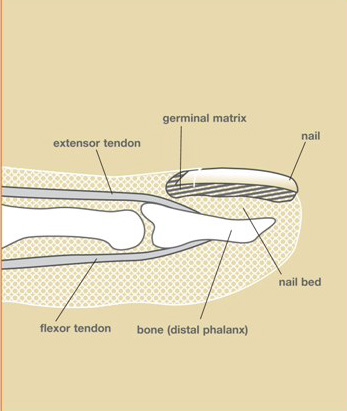
Illustration © American Society for Surgery of the Hand
Because the bone sits directly under the nail bed, a fracture of the end of the finger (tuft fracture) is often present.
Treatment options
Non-surgical treatment
- Trephination (draining blood under the nail). If most of the pain is from blood trapped under the nail, a small hole made through the nail in the office can relieve the pressure in seconds. The nail is usually kept in place and grows out normally.
- Dressing changes. A protective dressing is applied and changed every few days. The finger is kept elevated and clean.
- Splinting. If there is a fracture of the end bone, a small splint protects the fingertip for about 3 weeks.
Surgical treatment
- Nail bed repair. If the nail bed is cut or torn, it is sewn with fine, absorbable stitches under local numbing. This gives the new nail the best chance to grow in smooth and attached.
- Nail replacement or splint. The original nail (cleaned) or a thin plastic spacer is often placed under the cuticle after repair. This keeps the space open so the new nail can grow out without catching.
- Bone fixation. Occasionally a small pin is used if the tip bone is broken in a way that will not stay in place on its own.
The new nail grows slowly. Expect about 3 to 6 months for the nail to grow out fully, and the nail may have ridges or changes for a while even after a clean repair.
What to expect at your visit
Dr. Barrera will examine the fingertip, test the feeling, and obtain an X-ray to look for a fracture under the nail bed. Most nail bed injuries are treated in the office or minor procedure room under local numbing. The goal is to give the nail bed the best chance to heal flat and smooth so the new nail grows in well.
Call us if the finger is cold, pale, or numb, if blood under the nail is causing severe throbbing, if the nail is partly torn off, if there is a deep cut around or under the nail, or if the wound becomes red, draining, or very painful after the first day or two.
Related
Questions?
Call your office location for non-urgent questions:
- NYU Langone Laurelton · 646-501-4950
- NYU Orthopedic, Woodside · 929-429-3222
- NYU Orthopedic, Richmond Hill · 718-206-6923
- Jamaica Hospital Ambulatory Care Center (ACC) · 718-301-0720
See our office contact information for addresses and fax numbers.