Condition
Hand Infections
Infections of the nail, fingertip, skin, or deeper spaces of the hand. These can move fast, and some are surgical emergencies.
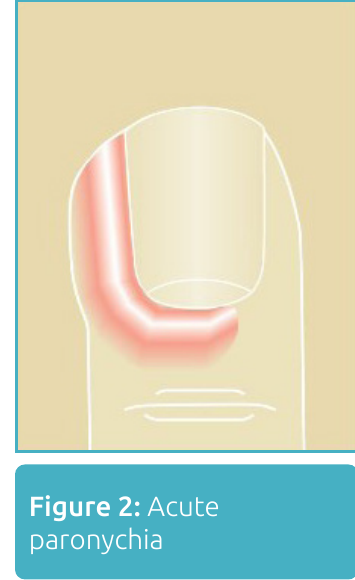
Illustration © American Society for Surgery of the Hand
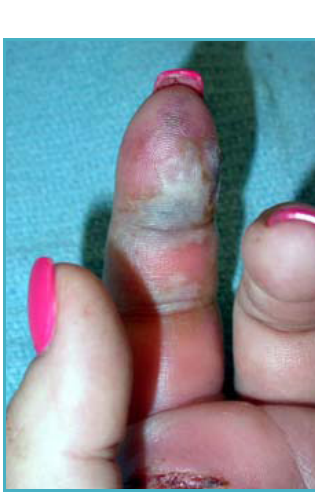
Illustration © American Society for Surgery of the Hand
What is a hand infection?
The hand has tight compartments and tendon sheaths that bacteria can track through quickly, so a hand infection is not the same as an infection elsewhere on the body. The most common types we see in clinic are:
- Paronychia — infection around the edge of the nail
- Felon — infection of the fleshy pad of the fingertip
- Cellulitis — a skin infection with redness, warmth, and swelling
- Bite wounds — human or animal bites, very high-risk because teeth push bacteria deep into the hand
- Flexor tenosynovitis — a deep infection inside the tendon sheath of the finger, a surgical emergency
- Abscess — a collection of pus in any part of the hand
Common symptoms
- Redness, swelling, warmth, and pain around a nail or fingertip
- Pus under the skin or oozing from around a nail
- A red streak tracking up the arm
- Fever, chills, or feeling ill
- A finger that is painful when gently straightened, swollen all the way around, and held slightly bent (the four signs of tendon sheath infection)
- A puncture wound or bite that is becoming red and painful in the days after the injury
Why does it happen?
Paronychia often starts after pulling a hangnail or biting the nail edges. Felons develop when bacteria enter through a splinter or a tiny cut on the fingertip pad. Bite wounds are especially high-risk because teeth inoculate bacteria deep into the tissue. Diabetes and conditions that lower the immune system raise the risk of all hand infections, and small wounds that would heal on their own in a healthy person can turn into serious infections in these patients.
Treatment options
Non-surgical treatment
- Warm soaks and oral antibiotics. Early paronychia and small areas of cellulitis often resolve with warm soaks several times a day and a short course of oral antibiotics.
- Splinting and elevation. Resting the hand in a splint and keeping it elevated above heart level help reduce swelling.
Surgical treatment
- Drainage. If there is pus under the skin or nail, drainage is needed in the office or operating room. Antibiotics alone will not cure a collection of pus.
- IV antibiotics and washout. Bite wounds, felons, and any tendon sheath infection need prompt surgical washout in the operating room and IV antibiotics. Flexor tenosynovitis can permanently stiffen the finger if not treated quickly.
- Hospital admission. Severe infections, infections in patients with diabetes, and deep space infections usually need admission for IV antibiotics and close monitoring.
What to expect at your visit
Dr. Barrera will examine the hand, look for pus pockets, check finger motion, and look for signs of deep infection. X-rays are taken if there is concern for gas in the tissue, a retained foreign body, or bone involvement. Blood tests are sometimes sent. The treatment plan depends on how deep the infection is and how quickly it is spreading.
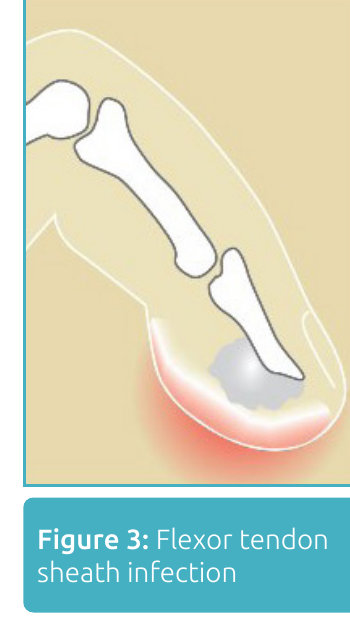
Illustration © American Society for Surgery of the Hand
Go to an emergency room for a red streak running up the arm, for fever with a hand infection, for a finger that is swollen, very painful with any motion, and held bent, or for any bite wound that is becoming more painful, red, or swollen. Hand infections can progress in hours, especially in patients with diabetes.
Questions?
Call your office location for non-urgent questions:
- NYU Langone Laurelton · 646-501-4950
- NYU Orthopedic, Woodside · 929-429-3222
- NYU Orthopedic, Richmond Hill · 718-206-6923
- Jamaica Hospital Ambulatory Care Center (ACC) · 718-301-0720
See our office contact information for addresses and fax numbers.