Condition
Metacarpal & Phalanx Fractures
Broken bones in the hand and fingers. Many heal in a splint; some need surgery to keep the fingers straight and moving.
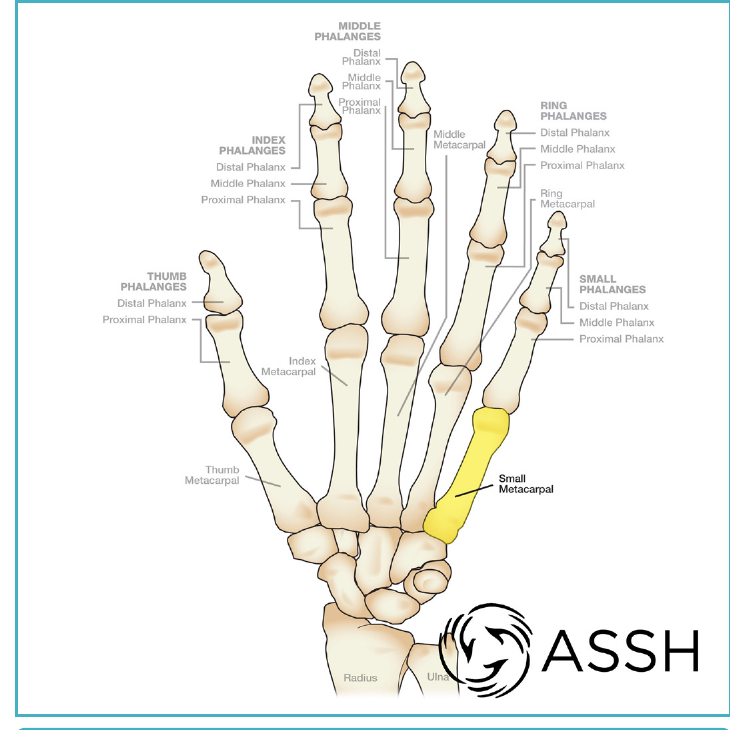
Illustration © American Society for Surgery of the Hand
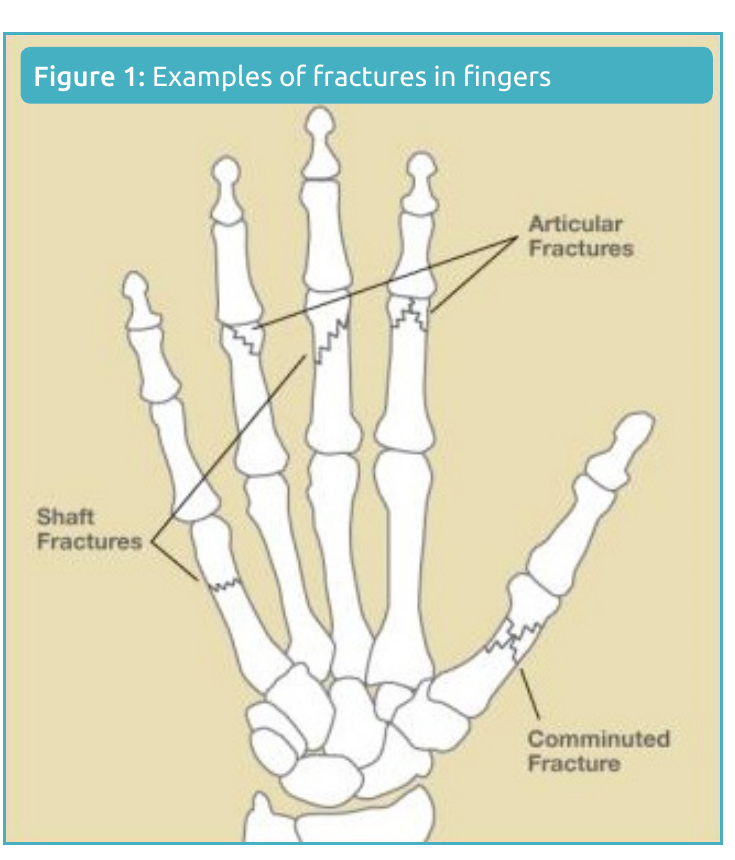
Illustration © American Society for Surgery of the Hand
What are these fractures?
The metacarpals are the long bones in the palm, one for each finger. The phalanges are the three small bones in each finger (two in the thumb). When any of these break, it is called a metacarpal or phalanx fracture. How we treat the break depends on which bone is involved, where along the bone it broke, whether the bones are lined up, and whether the finger rotates correctly when you make a fist.
Common symptoms
- Pain, swelling, and bruising in the hand or finger after an injury
- A bump or depression on the back of the hand (common with a "boxer's fracture" of the small finger metacarpal)
- A finger that crosses over or under its neighbor when you try to make a fist (rotational deformity)
- Pain when gripping or making a fist
- Stiffness in the nearby joints
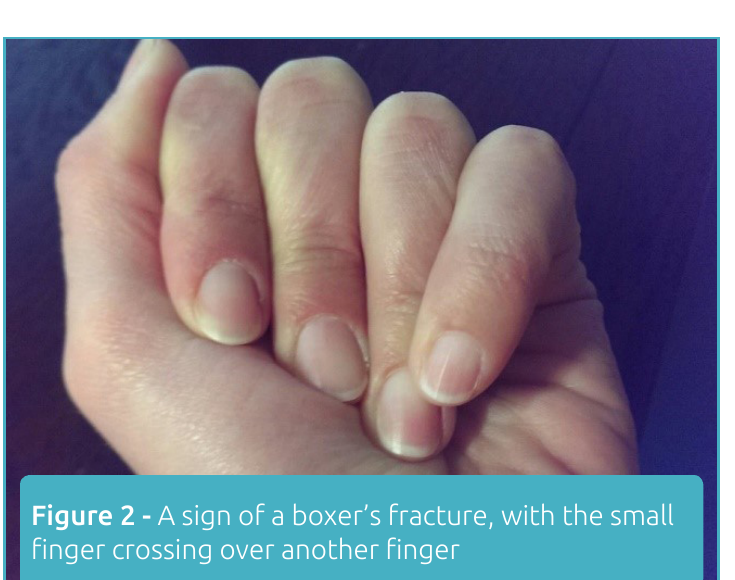
Illustration © American Society for Surgery of the Hand
Why does it happen?
Metacarpal fractures often happen from punching a hard object or a direct blow to the hand. Phalanx fractures happen from jammed fingers, crush injuries, falls, or twisting injuries. Both are common in sports and work-related injuries.
Treatment options
Non-surgical treatment
- Buddy taping or splinting. Many fractures that are in good alignment can be treated with a splint or by taping the injured finger to the neighboring finger. Early, gentle motion is usually encouraged to prevent stiffness, which is the most common problem after these injuries.
- Closed reduction. Some fractures can be gently pushed back into place in the office or emergency room and then held in a splint while they heal.
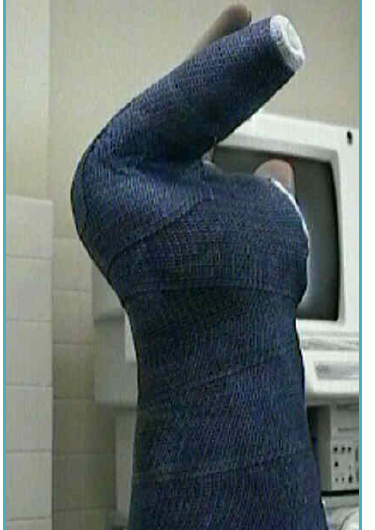
Illustration © American Society for Surgery of the Hand
Surgical treatment
- Pinning. Small wires placed through the skin hold the bones in position while they heal. The pins are typically removed in the office a few weeks later.
- Plates and screws. For unstable breaks, breaks that involve the joint, or fractures that cannot be held in alignment any other way, a small plate and screws hold the bones in place and allow earlier motion.
- Screw fixation alone. Some fractures can be fixed with one or two small screws through a minimal incision.
What to expect at your visit
Dr. Barrera will examine the hand, test how the fingers rotate when you make a fist, and review X-rays from several angles. The key questions are: are the bones in good position, does the finger rotate correctly, and is the joint involved. Based on those answers you will leave with a clear plan — splinting with early motion, a reduction, or scheduling surgery. Hand therapy is a key part of recovery for most of these injuries.
Seek emergency care for an open wound over the fracture, especially after a punch that struck another person's mouth (this carries a high infection risk). Call the office if a finger is crossing over its neighbor when you make a fist, if numbness develops, or if swelling becomes severe and does not improve with elevation.
Questions?
Call your office location for non-urgent questions:
- NYU Langone Laurelton · 646-501-4950
- NYU Orthopedic, Woodside · 929-429-3222
- NYU Orthopedic, Richmond Hill · 718-206-6923
- Jamaica Hospital Ambulatory Care Center (ACC) · 718-301-0720
See our office contact information for addresses and fax numbers.