Condition
Carpal Tunnel Syndrome
The most common nerve compression in the body. Treatable with splinting, injection, or a short outpatient surgery.
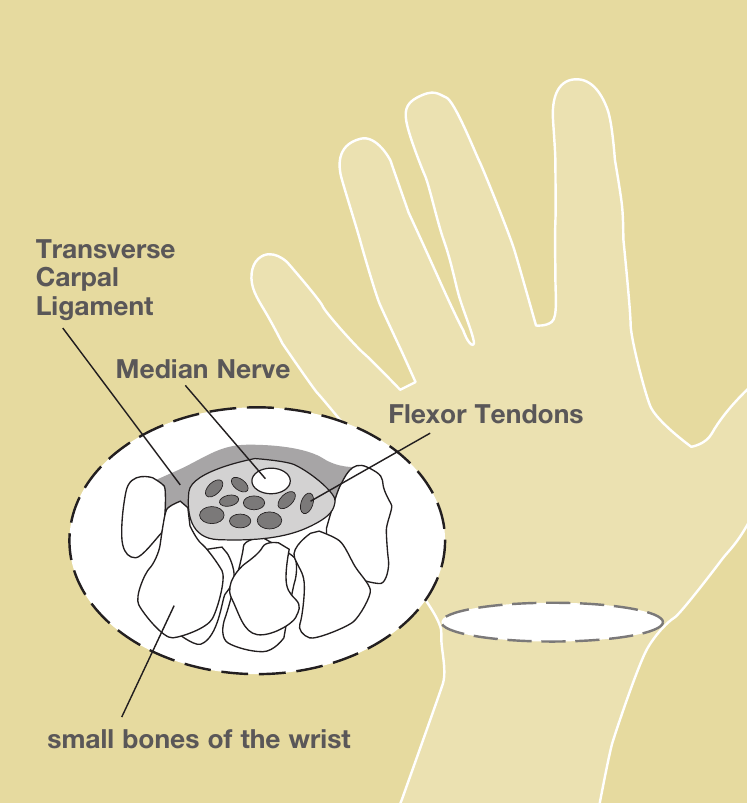
Illustration © American Society for Surgery of the Hand
What is carpal tunnel syndrome?
The median nerve runs from the neck through the arm and into the hand, passing through a narrow passage at the wrist called the carpal tunnel. When the tunnel becomes tight, the nerve gets squeezed. Over time this causes numbness, tingling, and weakness in the hand.
Common symptoms
- Numbness or tingling in the thumb, index, middle, and half of the ring finger
- Symptoms that wake you up at night and make you shake your hand to relieve them
- Dropping objects or difficulty with fine tasks like buttoning a shirt
- Weakness when pinching or gripping
- A feeling that the whole hand is numb, even though the small finger is usually spared
Why does it happen?
In most people there is no single cause. The tunnel is simply narrow and the lining around the tendons becomes thicker with age or use. Carpal tunnel syndrome is more common in women, in people with diabetes or thyroid disease, during pregnancy, and in jobs with prolonged gripping or vibration.
Treatment options
Non-surgical treatment
- Night splint. A wrist splint that keeps the wrist straight at night relieves pressure on the nerve and helps many patients, especially early in the disease.
- Activity changes. Avoiding bent-wrist positions and taking breaks from repetitive tasks can help.
- Steroid injection. A cortisone injection into the carpal tunnel can calm the swelling around the nerve. Relief is often temporary but can last months and sometimes confirms the diagnosis.
Surgical treatment
- Carpal tunnel release. A small surgery that opens the tight ligament over the nerve. It can be done through a small incision in the palm (open) or through a tiny incision with a camera (endoscopic). It takes about 10 to 15 minutes, uses local numbing, and you go home the same day. Most patients use the hand for light activity within a few days. Numbness that has been present for a long time can take months to recover; night symptoms usually improve quickly.
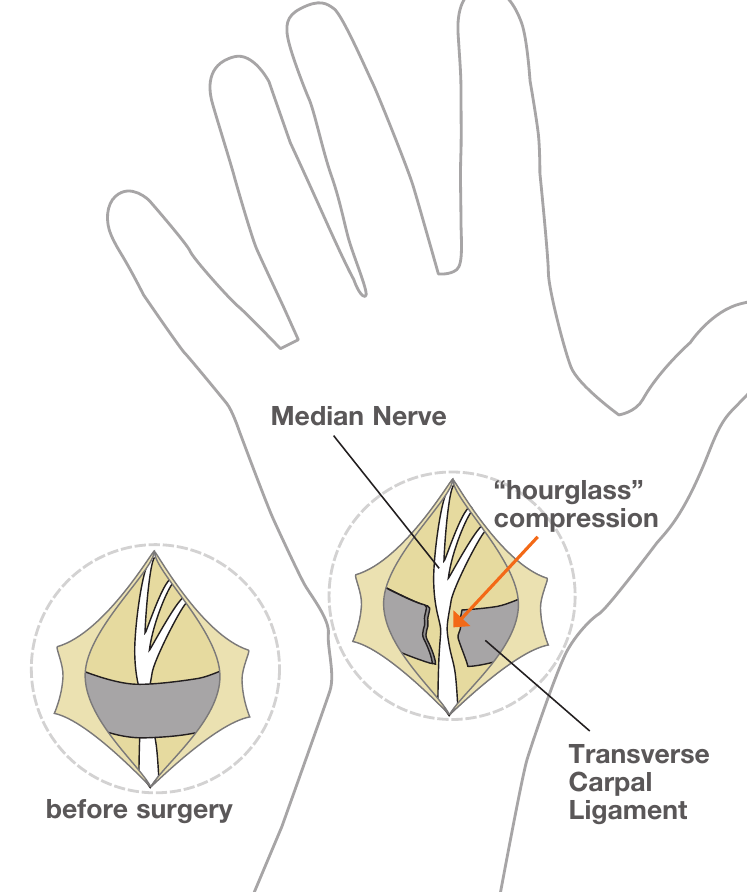
Illustration © American Society for Surgery of the Hand
What to expect at your visit
Dr. Barrera will ask about your symptoms and examine your hand, including tests that reproduce tingling by tapping on or bending the wrist. Often the diagnosis is clear from the exam. A nerve study (EMG) may be ordered to confirm the diagnosis, measure severity, and rule out other problems. Imaging is usually not needed.
Call us if you develop sudden severe pain, cannot move the thumb at all, or notice your fingers turning pale, blue, or cold. If you have an open cut or a recent wrist injury along with new numbness, seek care right away.
Related
Questions?
Call your office location for non-urgent questions:
- NYU Langone Laurelton · 646-501-4950
- NYU Orthopedic, Woodside · 929-429-3222
- NYU Orthopedic, Richmond Hill · 718-206-6923
- Jamaica Hospital Ambulatory Care Center (ACC) · 718-301-0720
See our office contact information for addresses and fax numbers.