Condition
Distal Radius Fracture
A broken wrist. The most common fracture in adults. Some heal in a cast; others need surgery.
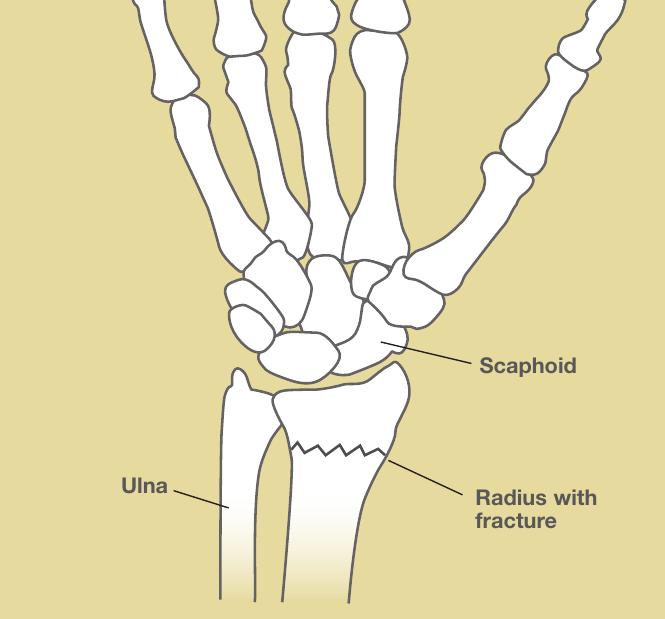
Illustration © American Society for Surgery of the Hand
What is a distal radius fracture?
The radius is the larger of the two forearm bones. When it breaks near the wrist, that is called a distal radius fracture. It is the most common broken bone in adults. The break can be a clean crack with the bones still lined up, or the bones can be shifted, tilted, or broken into several pieces.
Common symptoms
- Pain and swelling at the wrist right after a fall or injury
- A visible bump or bend at the wrist (sometimes described as a "dinner fork" shape)
- Inability to move the wrist or bear weight through it
- Bruising that can spread into the hand and forearm over days
Why does it happen?
Most distal radius fractures happen after a fall onto an outstretched hand. In younger adults they are often caused by higher-energy injuries (sports, bike accidents). In older adults a simple fall from standing height is the most common cause and can be a sign to discuss bone health.
Treatment options
Non-surgical treatment
- Cast or splint. If the bones are not badly shifted, or if they can be gently pushed back into place in the office or emergency room, a cast can hold everything still while the bone heals. Cast time is usually about 6 weeks, followed by hand therapy to regain motion.
Surgical treatment
- Open reduction and internal fixation. When the break is unstable, shifted, or involves the joint surface, surgery puts the bones back in their correct position and holds them there with a metal plate and screws on the front of the wrist. This usually allows you to start moving the wrist within a week or two, without a cast.
- Other options. Pins or an external fixator may be used in specific situations. Dr. Barrera will explain which approach fits your injury best.
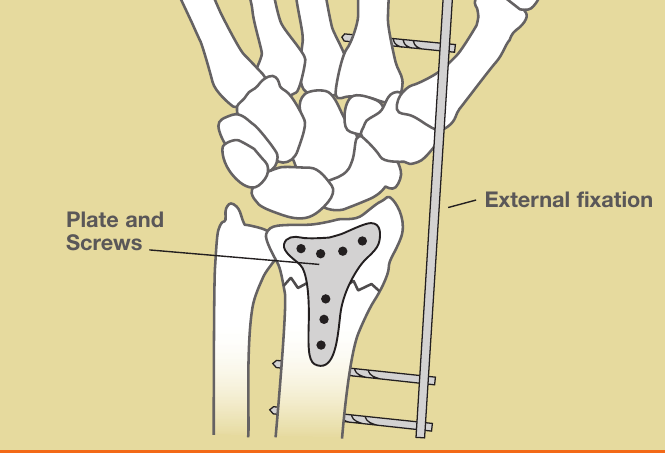
Illustration © American Society for Surgery of the Hand
What to expect at your visit
Dr. Barrera will examine the wrist, review X-rays, and sometimes order a CT scan to see the break in more detail. The decision between cast treatment and surgery depends on how the bones are aligned, whether the break extends into the joint, your hand dominance, your activity level, and your goals. You will leave the visit with a clear plan.
Seek emergency care if the skin over the wrist is broken or bleeding, if the fingers are pale, cold, or numb, or if the pain is severe and not relieved by elevation and ice. Swelling that gets dramatically worse after the first day, or fingers that will not move, also deserve urgent attention.
Related
Questions?
Call your office location for non-urgent questions:
- NYU Langone Laurelton · 646-501-4950
- NYU Orthopedic, Woodside · 929-429-3222
- NYU Orthopedic, Richmond Hill · 718-206-6923
- Jamaica Hospital Ambulatory Care Center (ACC) · 718-301-0720
See our office contact information for addresses and fax numbers.