Condition
Animal & Human Bites
Bites to the hand from cats, dogs, and humans are small wounds that carry a high risk of deep infection and need prompt attention.
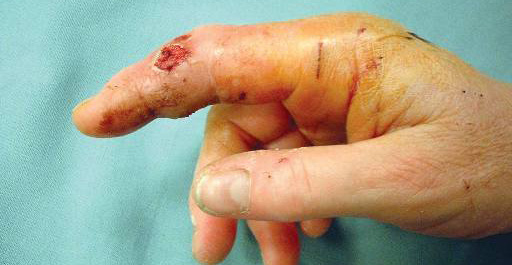
Illustration © American Society for Surgery of the Hand
What are bite injuries to the hand?
Bites to the hand look small but can cause serious infections. Cat teeth are like needles and push bacteria deep into tendon sheaths and joints. Dog bites often create crush and tearing injuries along with contamination. Human bites, including wounds from a punched tooth (a "fight bite") over the knuckle, can drive mouth bacteria right into a joint. Because the hand has many small closed spaces, infection can spread quickly and cause lasting problems if not treated early.
Common symptoms
- One or more puncture wounds, scratches, or tears on the hand or finger
- Pain, swelling, redness, or warmth within hours to a day
- Drainage of cloudy fluid or pus from a wound
- Pain with gentle finger bending, which can indicate a tendon sheath infection
- A small wound over a knuckle after a fight, which is especially high risk
- Fever or chills
Why does it happen?
- Cat bites. Small-looking puncture wounds, especially at the hand or wrist, are deceptively dangerous. About half of cat bites to the hand develop an infection.
- Dog bites. Can cause large tears, crush injuries, and skin loss along with bacterial contamination.
- Human bites and fight bites. A cut on the knuckle after hitting someone in the mouth is a human bite to a joint until proven otherwise. These need urgent evaluation.
Treatment options
Initial care for every bite
- Wash the wound. Rinse thoroughly with plenty of clean running water and soap as soon as possible.
- Apply a clean dressing. Cover with a clean cloth and elevate the hand.
- Seek medical care promptly. Most hand bites are best evaluated the same day. Do not wait to see if it will "calm down."
Non-surgical treatment
- Antibiotics. Most bites to the hand are treated with antibiotics that cover the mix of bacteria from saliva and skin.
- Wound care. Many bite wounds are cleaned and left open or only loosely closed to let the tissues drain, which helps prevent infection.
- Tetanus booster and rabies assessment. Your vaccination status and the animal's health are checked as part of the evaluation.
- Splinting and elevation. Resting the hand up above heart level helps reduce swelling and pain.
Surgical treatment
- Irrigation and washout. Deep or infected wounds, tendon sheath involvement, or fight bites over a joint usually need formal washout in the operating room with IV antibiotics.
- Tendon and joint repair. If a tendon is cut or a joint is violated, the involved structures are assessed and repaired at the same procedure or shortly after the infection is controlled.
What to expect at your visit
Dr. Barrera will examine the bite, test tendon and nerve function, look for deeper injury, and determine if the wound has reached a joint or tendon sheath. X-rays may be obtained to look for a tooth fragment or a bone injury. Many bites can be managed with thorough cleaning, oral antibiotics, splinting, and close follow-up. More serious bites are treated urgently with IV antibiotics and a trip to the operating room.
Go to the ER now if a bite to the hand is rapidly spreading in redness, if the finger or hand is very swollen or you cannot move it, if pus is draining from the wound, if you have a fever, or if you have a small cut over a knuckle after punching someone in the mouth. Cat bites and fight bites should be evaluated the day they happen.
Related
Questions?
Call your office location for non-urgent questions:
- NYU Langone Laurelton · 646-501-4950
- NYU Orthopedic, Woodside · 929-429-3222
- NYU Orthopedic, Richmond Hill · 718-206-6923
- Jamaica Hospital Ambulatory Care Center (ACC) · 718-301-0720
See our office contact information for addresses and fax numbers.