After surgery
After Flexor Tendon Repair
A delicate recovery that depends on strict splint wear and early guided therapy. Pushing too soon can rupture the repair; waiting too long causes permanent stiffness.
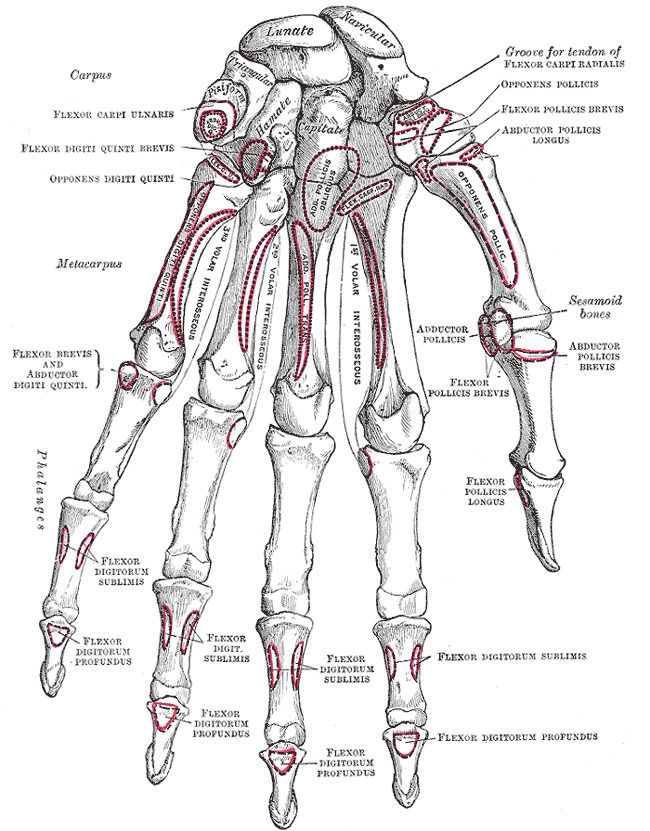
What was done
One or more cut tendons in the palm side of your finger or hand were sewn back together. The repair is strong enough for early controlled motion but can rupture if loaded too soon. You are in a dorsal blocking splint that keeps the wrist and fingers in a safe position.
The most important rules
- Do not make a full fist or pinch with the surgical hand for at least 6 weeks.
- Do not lift or grip anything with the surgical hand for at least 6 weeks.
- Wear the splint at all times until told otherwise, including overnight. It comes off only during therapy sessions.
- Do not remove the splint to wash or check the finger. The splint position protects the repair.
The first week
- Keep the splint clean and dry. Keep the hand elevated above the heart as much as possible.
- Move the shoulder and elbow to prevent stiffness there.
- Pain medicine as prescribed; most patients switch to acetaminophen (Tylenol) within a few days.
Days 5 to 7: start of hand therapy
- You will start hand therapy within the first week after surgery. This is essential. A certified hand therapist will guide you through a specific early motion protocol.
- The therapist makes a custom dorsal blocking splint and sets up a home exercise program of gentle, protected finger motion.
- Skipping or delaying therapy dramatically increases the chance of stiffness and a poor result.
Weeks 1 to 6: protected motion phase
- Splint on at all times (except during supervised therapy).
- Only the exercises your therapist teaches you. Do not try to make a fist.
- No lifting, gripping, pinching, or bearing weight.
Weeks 6 to 12: active motion and light strengthening
- The splint comes off during the day, though it may still be worn at night or in crowded situations.
- Active fist making and light use of the hand begin under therapy guidance.
- Still no heavy lifting, pushing, or strong gripping.
After 12 weeks
Gradual return to full activity, including work and sports, as guided by Dr. Barrera and your therapist. Most patients take 3 to 6 months to feel fully recovered. Some stiffness often remains permanently, particularly with repairs in the "no man's land" of the finger.
- You feel a sudden "pop" or sharp pain in the finger — this may mean the repair has ruptured
- The finger suddenly cannot bend when it could before
- The finger becomes pale, cold, or dusky
- You have a fever over 101°F or the incision is draining or spreading red
- The splint gets wet, broken, or feels loose
Related
Questions?
Call your office location for non-urgent questions:
- NYU Langone Laurelton · 646-501-4950
- NYU Orthopedic, Woodside · 929-429-3222
- NYU Orthopedic, Richmond Hill · 718-206-6923
- Jamaica Hospital Ambulatory Care Center (ACC) · 718-301-0720
See our office contact information for addresses and fax numbers.