Condition
Trigger Finger
A common, treatable condition where a finger catches or locks when you try to straighten it.
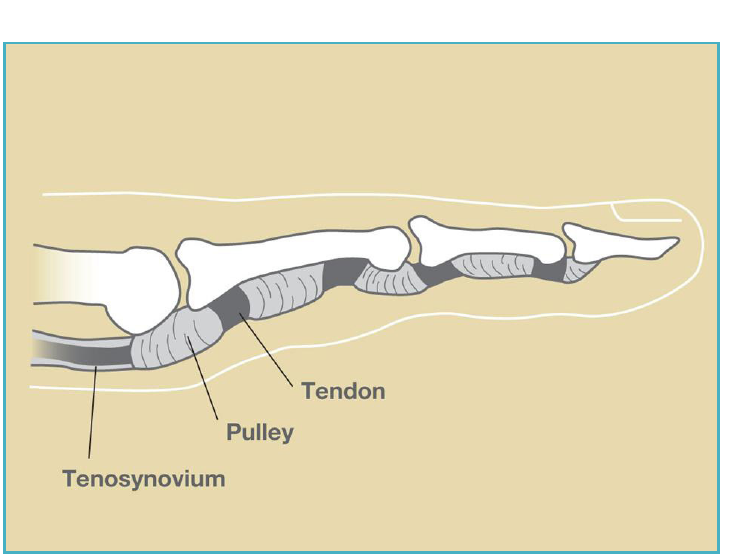
Illustration © American Society for Surgery of the Hand
What is trigger finger?
The tendons that bend your fingers slide through a series of small tunnels called pulleys. In trigger finger, the first pulley at the base of the finger becomes thick and tight, and the tendon catches as it tries to glide through. The finger may click, lock, or snap straight suddenly, which is where the name comes from. Trigger finger can happen in any finger or the thumb.
Common symptoms
- A catching, clicking, or popping feeling when you bend or straighten the finger
- A tender bump or soreness in the palm at the base of the finger
- The finger locks in a bent position and has to be forced straight
- Stiffness that is often worse in the morning
- Pain that can spread into the finger or the hand
Why does it happen?
Trigger finger is caused by inflammation and thickening of the pulley at the base of the finger. It is more common in women, in people between the ages of 40 and 60, and in people with diabetes, rheumatoid arthritis, or thyroid disease. Repetitive gripping can make symptoms worse but is usually not the single cause.
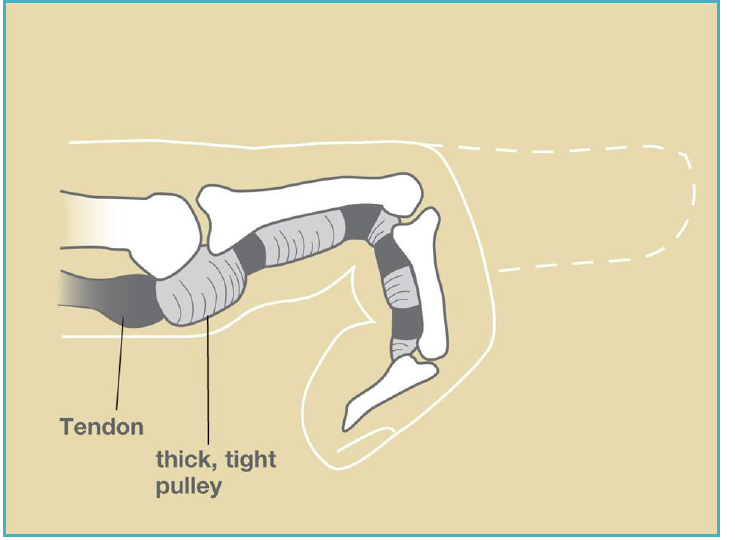
Illustration © American Society for Surgery of the Hand
Treatment options
Non-surgical treatment
- Activity changes and night splinting. A splint that holds the finger straight at night can let the pulley calm down. This works best for milder cases.
- Steroid injection. A small injection of corticosteroid into the pulley reduces inflammation and is the most common first step. Many patients get long-lasting relief from one or two injections. Relief often begins within a week or two.
Surgical treatment
- Trigger finger release. If injections do not work or the finger keeps locking, a small surgery opens the tight pulley so the tendon can glide freely. It is done in the office or operating room with local numbing, usually takes about 15 minutes, and is performed through a small incision in the palm. Most patients use the hand for light activity the same day.
What to expect at your visit
Dr. Barrera will ask about your symptoms, examine your hand, and in most cases the diagnosis is clear from the exam alone. Imaging is usually not needed. Together you will decide on the next step, which is most often a steroid injection or surgery depending on how long you have had symptoms and what you have already tried.
Call us if your finger becomes locked and you cannot straighten it at all, if the hand becomes red, hot, or very swollen, or if you have a fever along with finger pain.
Related
Questions?
Call your office location for non-urgent questions:
- NYU Langone Laurelton · 646-501-4950
- NYU Orthopedic, Woodside · 929-429-3222
- NYU Orthopedic, Richmond Hill · 718-206-6923
- Jamaica Hospital Ambulatory Care Center (ACC) · 718-301-0720
See our office contact information for addresses and fax numbers.