After surgery
After Nerve Repair
Nerves heal slowly. Protection in the first weeks and patience over many months are the keys to a good result.
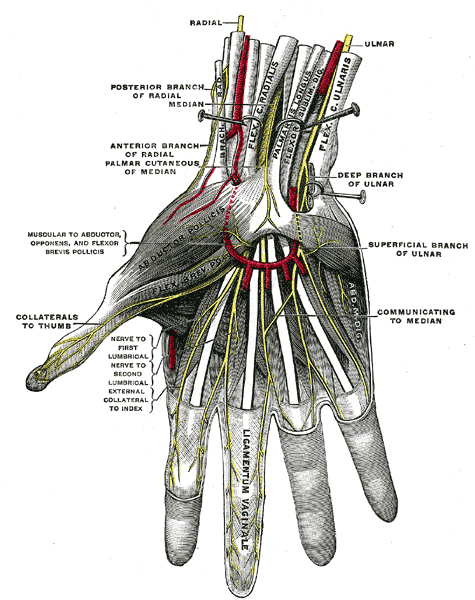
What was done
A cut or damaged nerve was repaired. Depending on the injury, this was either a direct repair (the two ends sewn back together), a conduit or allograft repair (a small tube or processed nerve used to bridge a gap), or a nerve graft (a small piece of a less-important nerve used to bridge a longer gap). You are in a splint that keeps the arm or finger in a position that protects the repair.
The most important rules
- Wear the splint at all times for the first 3 weeks. Do not remove it to check the incision or to wash.
- Do not stretch or load the repair. Stretching can pull the repair apart.
- Keep the splint clean and dry. Keep the hand elevated as much as possible.
The first 3 weeks
- Splint on continuously.
- Move the joints that are not in the splint (shoulder, elbow, other fingers) to avoid stiffness.
- Pain medicine as prescribed. Most patients transition to acetaminophen or ibuprofen within a few days.
- The finger or hand will feel numb — this is expected while the nerve heals.
Weeks 3 to 6: protected motion
- The splint is removed for gentle therapy and light daily activities, still worn at night and in risky situations.
- Hand therapy starts careful motion of the joints the nerve crosses.
- No heavy lifting, gripping, or stretching of the repaired nerve.
How fast do nerves recover?
- Nerves grow down the arm at about 1 inch per month, or 1 millimeter per day.
- A digital nerve repair at the base of the finger often shows return of feeling at the fingertip at 3 to 6 months.
- Higher repairs (at the wrist, forearm, or above the elbow) can take 12 to 18 months, sometimes longer, before muscles and sensation recover.
- Return of function is rarely 100%. The goal is meaningful recovery, not perfection.
Signs the nerve is healing
- A tingling or "pins and needles" feeling when you tap along the course of the nerve. This is called a Tinel's sign and it moves down the arm as the nerve grows.
- Gradual return of sensation — first a buzzing or odd feeling, then real touch.
- Gradual return of muscle strength (for nerves that power muscles).
Desensitization and therapy
As feeling returns, the area can feel very sensitive or even painful. Gentle daily tapping, rubbing with different textures, and hand therapy help the nerve mature and the brain relearn the signal. This is a key part of recovery.
Follow-up
You will be seen at 10 to 14 days for a wound check and suture removal, then at 6 weeks, 3 months, 6 months, and 12 months. Follow-up often includes exam of the Tinel's sign and, sometimes, a repeat EMG to track recovery.
- You feel a sudden "pop" or pull at the repair site
- The splint gets wet, broken, or feels loose
- You have a fever over 101°F or the incision is draining pus or spreading red
- The finger or hand becomes cold, pale, or dusky
- Severe pain that is not controlled by your medications
Related
Questions?
Call your office location for non-urgent questions:
- NYU Langone Laurelton · 646-501-4950
- NYU Orthopedic, Woodside · 929-429-3222
- NYU Orthopedic, Richmond Hill · 718-206-6923
- Jamaica Hospital Ambulatory Care Center (ACC) · 718-301-0720
See our office contact information for addresses and fax numbers.