Condition
Scaphoid Fracture
A small but serious wrist fracture that is easy to miss. Early treatment makes a big difference.
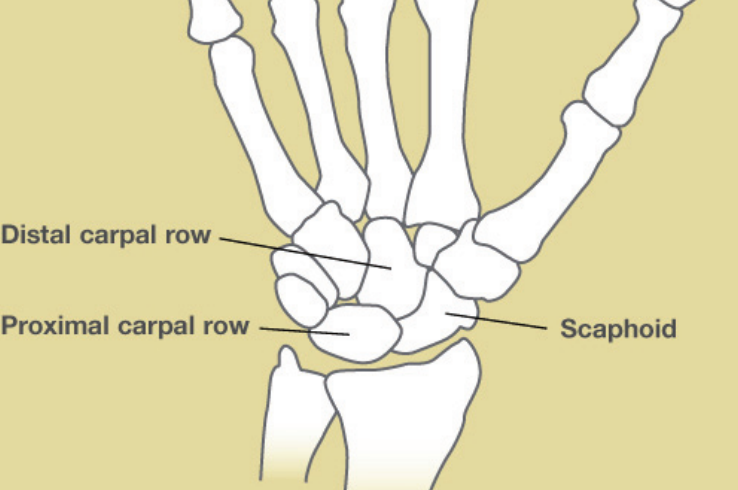
Illustration © American Society for Surgery of the Hand
What is a scaphoid fracture?
The scaphoid is a small bone in the wrist, about the size and shape of a cashew. It sits at the base of the thumb and plays a key role in how the wrist moves. A scaphoid fracture is a break in this bone. Because the scaphoid has a fragile blood supply, a missed or late-treated scaphoid fracture can fail to heal, which leads to pain and wrist arthritis over time. Early diagnosis matters.
Common symptoms
- Pain on the thumb side of the wrist after a fall
- Tenderness in the small dip at the base of the thumb (the "snuffbox")
- Pain with gripping or pinching
- Mild swelling, sometimes without obvious bruising
- Pain that is often dismissed as a "sprained wrist" at first
Why does it happen?
Almost all scaphoid fractures happen after a fall onto an outstretched hand. They are most common in young active adults, but can occur at any age. Because the initial swelling and bruising are often mild, many patients assume the wrist is only sprained and delay seeing a doctor.
Treatment options
Non-surgical treatment
- Short arm cast. For non-displaced fractures, a cast covering the wrist is worn for 6 to 12 weeks. A standard short arm cast works as well as a thumb-spica cast for most scaphoid fractures. Location of the break within the scaphoid matters: fractures near the thumb side (distal pole) heal more reliably, while fractures near the wrist side (proximal pole) heal more slowly and sometimes fail in a cast because the blood supply to that part of the bone is more tenuous.
Surgical treatment
- Screw fixation. A small screw placed across the break through a tiny incision stabilizes the bone. This lets most patients return to activity sooner, avoid a long cast, and have a higher chance of healing, especially for fractures near the wrist side (proximal pole) of the scaphoid or any fracture that is displaced.
- Bone grafting. If a scaphoid has already failed to heal (non-union), surgery with a bone graft is used to get it to heal. These are more complex cases and Dr. Barrera will walk you through the plan.
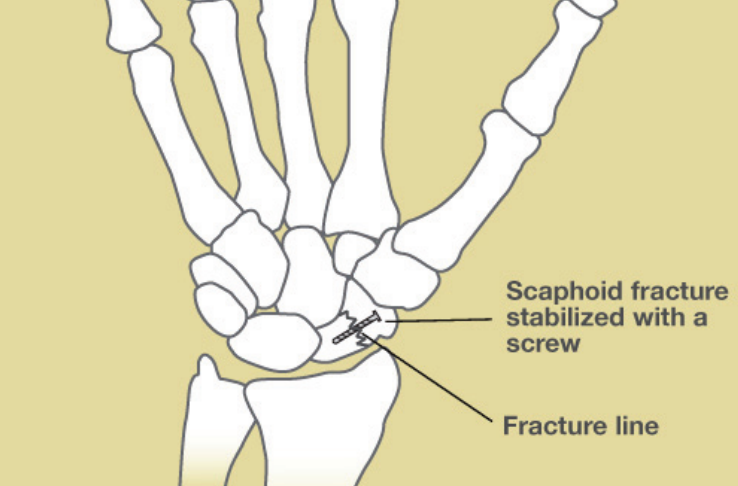
Illustration © American Society for Surgery of the Hand
What to expect at your visit
Dr. Barrera will examine your wrist and get X-rays. Scaphoid fractures are sometimes invisible on X-ray for the first one to two weeks. If the exam suggests a scaphoid injury but the X-rays are negative, you will be placed in a splint and either brought back for repeat X-rays or sent for an MRI or CT scan, which can catch fractures that X-rays miss.
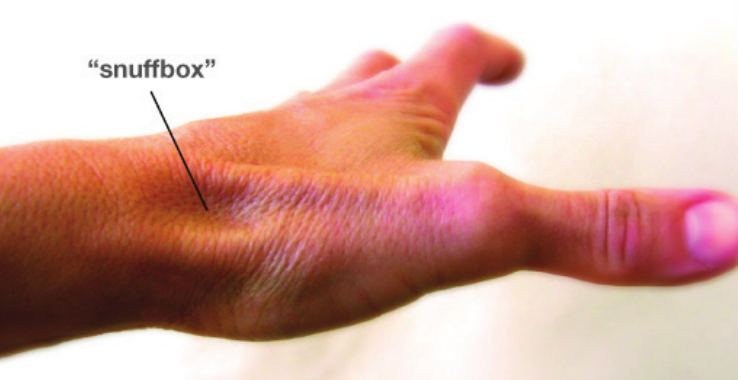
Illustration © American Society for Surgery of the Hand
Call us if a wrist "sprain" after a fall is not improving within a week or two, or if there is pain at the base of the thumb that keeps you from gripping. Missing a scaphoid fracture is the most common reason these injuries end up needing more complex surgery later.
Questions?
Call your office location for non-urgent questions:
- NYU Langone Laurelton · 646-501-4950
- NYU Orthopedic, Woodside · 929-429-3222
- NYU Orthopedic, Richmond Hill · 718-206-6923
- Jamaica Hospital Ambulatory Care Center (ACC) · 718-301-0720
See our office contact information for addresses and fax numbers.